Vegetal Collection - nature, geometry, and mural in a modern edition
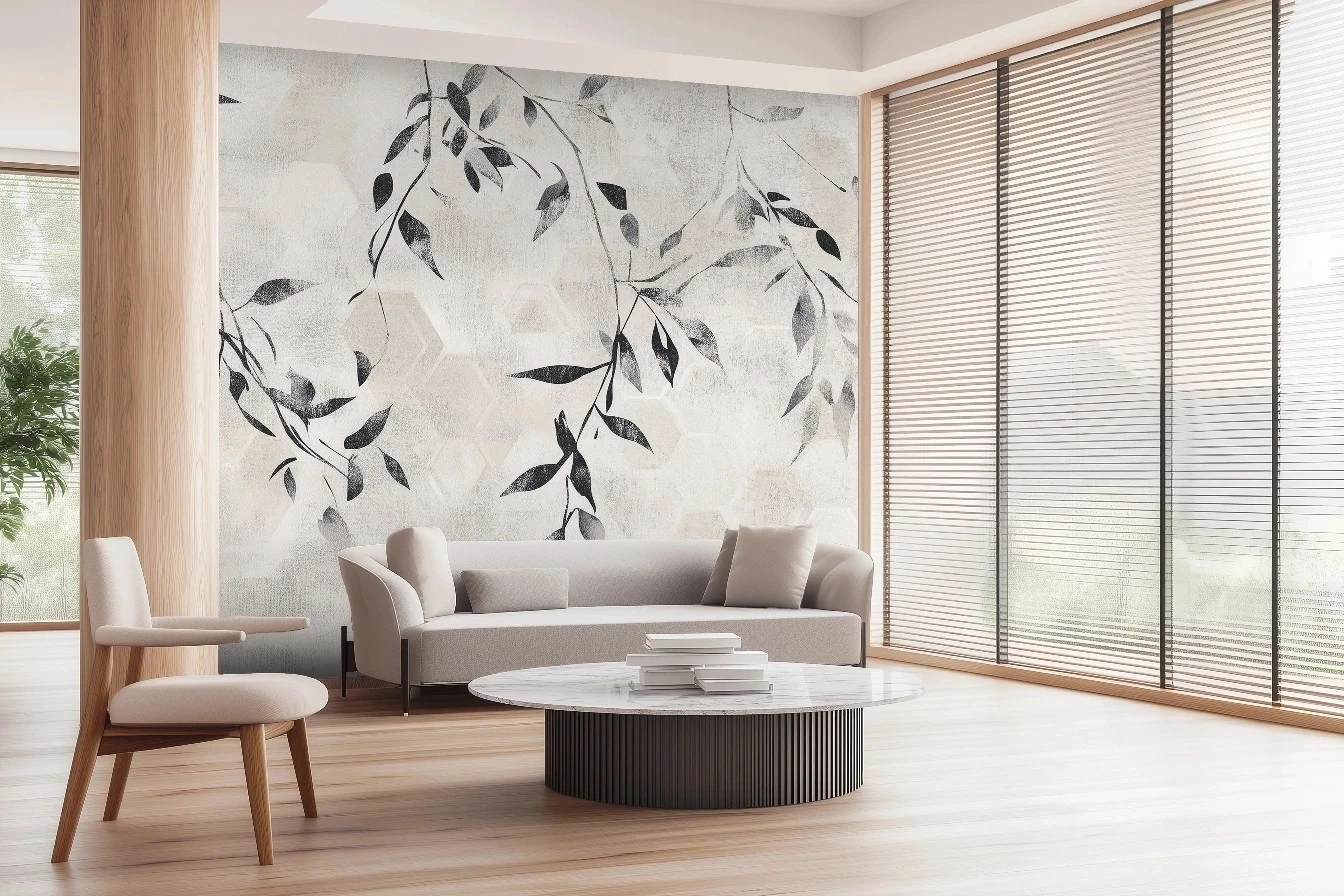
Vegetal Collection - nature, geometry, and mural in a modern edition
Plants have long been present on wall murals. However, in the Vegetal collection, they do not create classic botanical illustrations. Leaves, branches, and flowers appear alongside distinct geometric shapes, broad color planes, and painterly scuffs. Sometimes they take the foreground, other times they remain just a delicate accent. Each design uses these elements in different proportions.
It is this diversity that draws attention. One mural is based on several large leaves, another shows single wildflowers, and yet another uses only thin branches placed at the edge of the composition. The plant motif remains the common denominator of the entire collection, but no pattern looks like a repetition of the previous one.
Large background planes are as important as the plant motifs
The first thing easily noticed after viewing the entire collection is the amount of free space. In the murals Desertique, Marguerite, or Rameau, a significant part of the wall remains light. Plants occupy only selected fragments of the composition, most often at the side edges or in the lower part of the design.
Such framing works well on large walls. A sofa, bed, or table does not cover the main motif because the plants have been arranged outside the central part of the mural. The wall remains readable even after placing furniture.
In designs kept in beiges and warm browns, the calm transitions between colors also attract attention. These are not sharp boundaries. Individual shades smoothly blend into one another, leaving the impression of a hand-painted background.
Geometry appears in almost every design
Plants do not appear alone. In many patterns, they are accompanied by triangles, hexagons, diagonal divisions, or thin golden lines. Sometimes they form a distinct element of the composition, other times they remain barely visible under a layer of color.
In the Herbage mural, geometric figures are combined with watercolor spots and olive branches. The green of the leaves passes through light triangles, and golden outlines organize the entire layout. Grimpant, on the other hand, uses translucent polygons through which dark leaf silhouettes shine. The image changes depending on the distance. Up close, the plants attract attention. From a farther perspective, the geometric divisions become more visible.
Each mural tells a different story
The most minimalist designs use single branches, thin stems, or a few leaves. This is how Rameau looks, where dark branches freely fall from the upper part of the composition, and Marguerite, based on delicate wildflowers arranged against a background of soft blues and light grays.
Ficus has a different character. Several large leaves create the main motif, and rectangular planes in the background resemble a contemporary collage. The plants are not shown as dense vegetation. Each leaf remains clearly visible.
The most expressive is Fleuron. Large flowers in shades of red, apricot, and yellow occupy a significant part of the mural. The green of the leaves and the darker background organize the whole, but the flowers remain the main element of the composition.
Colors change the perception of the entire collection
Vegetal is not limited to one color palette. Some patterns use warm beiges, caramel, and off-white. Others transition into cooler greens, blues, or graphite. There are also designs where intense colors appear only on selected flowers.
Such diversity allows you to match the mural to the character of the interior. Light compositions work well with wood, stone, and natural fabrics. Darker designs create a stronger contrast with light furniture, and colorful flowers can take on the role of the main accent in a living room or commercial space.
A collection that offers great freedom of arrangement
Individual murals differ in intensity. Some build a calm background for interior furnishings. Others immediately attract the eye and become the most important element of the wall. The common element remains the way nature is combined with geometry and the conscious leaving of empty space around the plant motifs.
Vegetal does not rely on one graphic style. The collection includes designs reminiscent of painting, contemporary collage, watercolor, or minimalist plant drawing. It is this diversity that makes each mural retain its own character, while the entire collection remains coherent.
